Concrete vs fibreglass pools: which is right for your property?
Choosing between a concrete and fibreglass pool is one of the first major decisions many homeowners face when planning a new swimming pool.
Both can create an enjoyable and functional outdoor space, but they differ considerably in the way they are designed, constructed and integrated into a property. The right option depends on factors such as the available space, site conditions, design priorities and how much flexibility you want in the finished pool.
Understanding those differences can make it easier to determine which construction method is best suited to your project.
What is the main difference between concrete and fibreglass pools?
The key difference is how the pool itself is created.
A fibreglass pool is manufactured as a preformed shell and transported to the property for installation. Homeowners generally choose from an existing range of shapes, sizes and configurations offered by the manufacturer.
A concrete pool is constructed specifically for the property. Its dimensions, shape, depth and features can therefore be developed around the site and the overall design brief.
Neither approach is automatically right for every property. The most suitable choice depends on what you want from the pool and how closely the design needs to respond to the surrounding home and outdoor space.
Concrete vs fibreglass pools at a glance
- Design: Concrete pools can be developed around the individual property, while fibreglass pools are selected from manufactured shell options.
- Shape and size: Concrete offers greater flexibility in dimensions and configuration. Fibreglass is limited to the available shell range.
- Installation: Concrete pools are constructed on site. Fibreglass shells are manufactured before being transported to the property.
- Finishes: Concrete can accommodate a broad range of custom finish options. Fibreglass finishes form part of the manufactured shell.
- Site response: Concrete can be configured around unusual layouts, while fibreglass works best where an available shell suits the site.
- Custom features: Concrete provides greater flexibility for integrated steps, seating, depth changes and architectural features.
Design flexibility
Design flexibility is one of the biggest differences when comparing a concrete vs fibreglass pool.
Because fibreglass pools use pre-manufactured shells, the shape, dimensions and internal configuration are generally selected from an established range. This can work well where a standard pool configuration suits the available space and the homeowner's requirements.
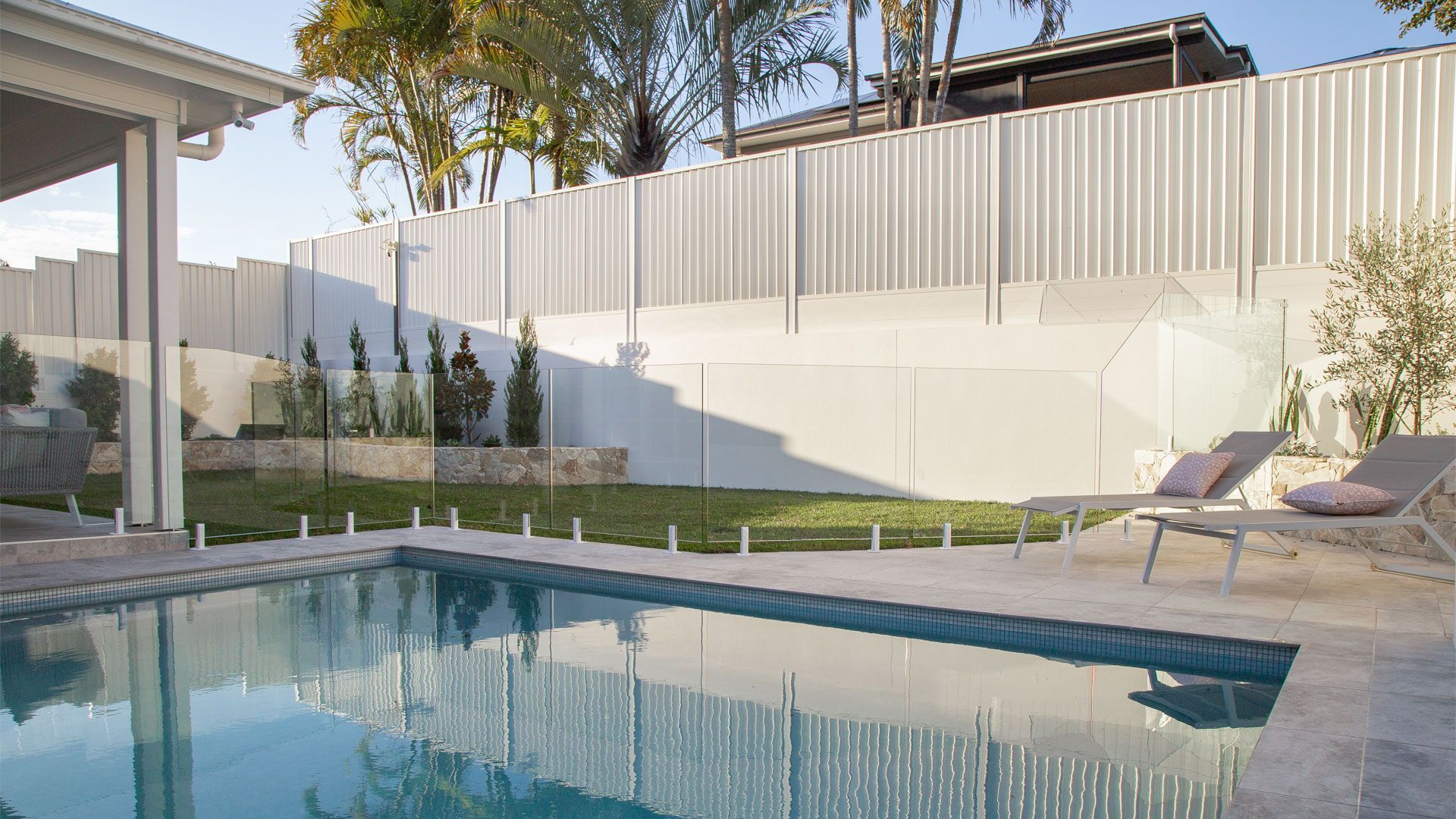
Concrete pools provide considerably more freedom to develop the structure around the property. The dimensions can be adjusted to suit a particular outdoor area, while elements such as depth, steps, seating and architectural features can form part of the individual design.
For properties where the pool needs to align closely with the home, landscaping or outdoor entertaining areas, this flexibility can be particularly valuable. Vista Pools' custom pool design approach considers the pool as part of the wider property rather than as an isolated feature.
Shape and size
A fibreglass pool needs to be manufactured, transported and delivered as a complete shell, which influences the range of sizes and shapes available. For many residential properties, those existing formats provide plenty of choice.
Concrete construction allows the size and proportions to be developed around the individual site instead. This can be useful where the property calls for:
- A long, narrow lap pool
- A compact pool for a smaller outdoor area
- An unusual shape
- Different depths within the same pool
- Integrated steps or seating
- An infinity or architectural edge
- A pool that needs to follow particular building or landscape lines
This does not necessarily mean a concrete pool needs to be large or complex. The same flexibility can be valuable when making efficient use of a smaller space.
Site and property considerations
The available site should play an important role in the decision. Access, block layout, surrounding structures, landscaping and the relationship between the pool and the home can all influence what is practical.
A standard fibreglass shell may fit some properties very comfortably. On other sites, adapting the outdoor area around a predetermined pool shape may place greater limitations on the overall design.
Concrete pools can instead be planned around the available space. That flexibility can be particularly useful for renovations, architecturally designed homes or properties where the pool needs to form part of a larger outdoor design.
Before choosing either option, it is worth considering the property as a whole rather than focusing only on the pool itself.
Installation and construction
The construction process also differs significantly.
Fibreglass shells are manufactured away from the property and then transported to the site for installation. Because much of the pool already exists before it arrives, the on-site construction process can differ substantially from a custom concrete build.
A concrete pool is constructed on the property through a staged building process. This generally involves site preparation, structural construction and finishing work before the pool is ready for use. A more customised design may also require coordination with other elements of the property or broader building works.
For homeowners comparing the two, the important point is not simply which construction method is faster. It is whether the construction approach suits the design, site and overall priorities of the project.
Finishes and appearance
Both pool types offer a range of aesthetic options, although the approach is different.
With a fibreglass pool, the surface forms part of the manufactured shell, with colours and finishes selected from the manufacturer's available range.
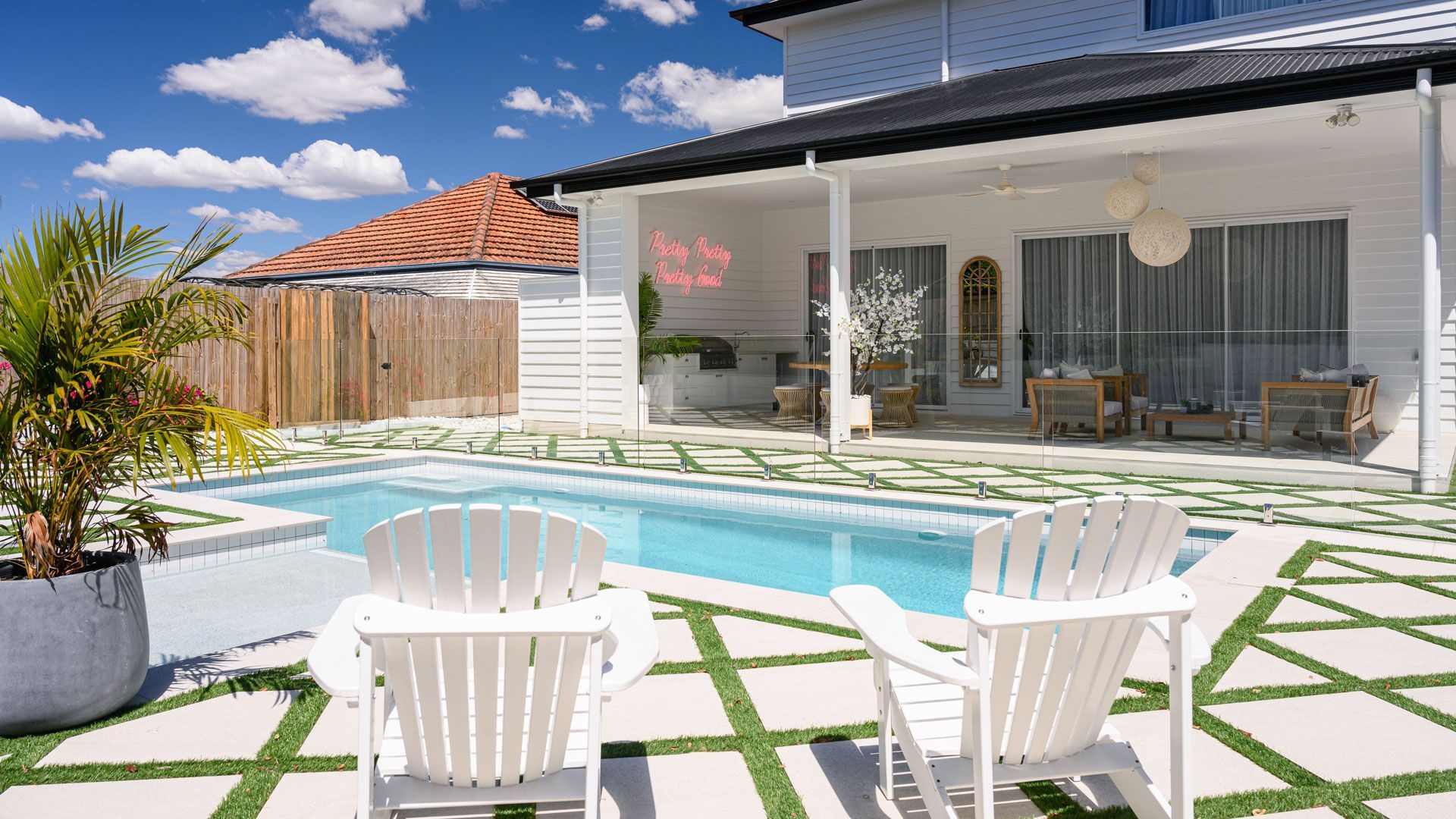
Concrete pools allow the internal finish and surrounding details to form part of the broader design process. Depending on the project, this can provide greater flexibility when coordinating the pool with paving, landscaping, architectural materials and the overall character of the home.
For projects where the pool is intended to become a significant architectural feature, the ability to control these details may carry more weight in the decision.
Maintenance and ongoing ownership
Any swimming pool requires regular maintenance, including water treatment, cleaning and care of the filtration and circulation systems.
The exact maintenance requirements can vary depending on the pool surface, equipment, surrounding environment and how frequently the pool is used.
Rather than assuming one construction type will automatically require less attention in every situation, it is worth looking at the entire pool specification and understanding the ongoing requirements of the particular system being considered.
Equipment selection, landscaping and the surrounding environment can all influence day-to-day pool care regardless of whether the structure is concrete or fibreglass.
What about pool cost?
Cost is naturally an important part of comparing concrete and fibreglass pools, but there is no single figure that applies to every project.
The overall investment can be influenced by:
- Pool size and depth
- Site access
- Ground and site conditions
- Design complexity
- Selected finishes
- Additional features
- Surrounding landscaping or building works
- Equipment and filtration requirements
Fibreglass and concrete pools also represent different approaches to pool construction, so comparing two projects purely on an advertised starting price may not provide a meaningful comparison.
A more useful approach is to establish the pool you actually want and compare options based on the complete scope.
When might a fibreglass pool be suitable?
A fibreglass pool may be worth considering where:
- One of the available shell designs works well with the property
- Extensive customisation is not a priority
- The pool does not need to respond to unusual dimensions
- The preferred configuration is already available as a manufactured option
For these projects, selecting from an existing range can provide a straightforward way to establish the pool layout.
When might a concrete pool be suitable?
Concrete construction may be particularly useful where:
- The pool needs to be designed around the property
- Custom dimensions or depths are important
- The site has unusual space or layout requirements
- The pool needs to integrate closely with the architecture
- Specific steps, seating or internal features are required
- An infinity edge or other architectural feature forms part of the design
- The homeowner wants greater control over the overall pool configuration
Vista Pools specialises in custom concrete pools for Brisbane properties, with each project developed around the site, intended use and wider architectural brief.
Explore our concrete pool design and construction service to learn more about how a tailored pool can respond to your property.
Concrete vs fibreglass pool: which should you choose?
There is no universal answer to the concrete vs fibreglass pool question.
For some properties, an existing fibreglass shell may provide the shape, size and functionality required. For others, the ability to control the dimensions, features and relationship between the pool and the wider property makes concrete construction more appropriate.
The best starting point is to consider what the pool needs to achieve. Think about the available space, how you intend to use the pool, how it should relate to the home and whether a standard configuration can deliver the result you want.
If customisation, architectural integration and site-specific design are important priorities, concrete is likely to provide greater scope to develop the pool around those requirements.
Discuss your pool project
Planning a new pool in Brisbane? Vista Pools works with homeowners and builders to develop tailored concrete pool designs around the property, architecture and intended use.
Contact Vista Pools to discuss your site, design priorities and the type of pool you are considering.
Recent Posts